
Why Some Fence Contractors Recommend Calling Land Surveyors First
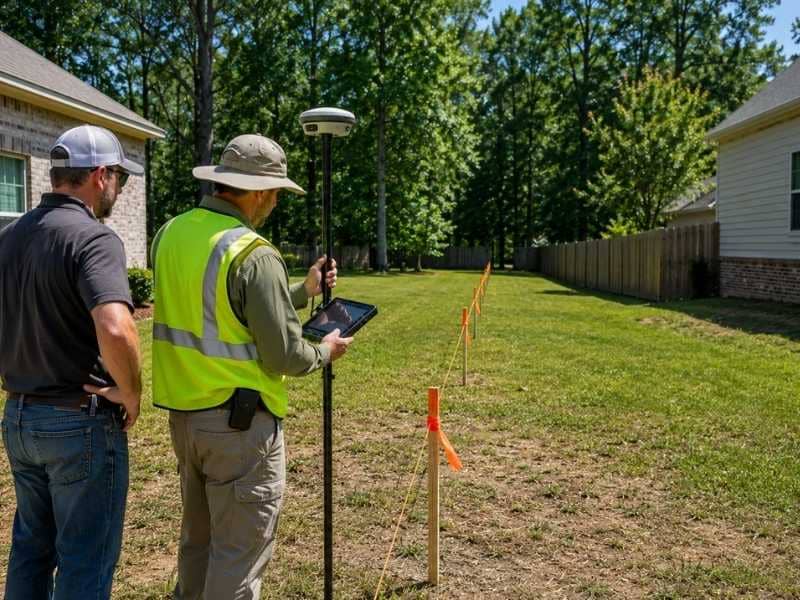
Experienced fence contractors know that land surveyors can make their job easier before a single post goes in the ground. When a contractor shows up without confirmed boundary details, the whole project runs on guesses. That creates problems that cost more to fix than to prevent. Getting a land surveyor involved before fence work starts is one of the simplest ways to keep a project on track and on budget.
How Boundary Information Affects Material Estimates
A fence contractor’s material order depends on one key number: how many feet of fence the job requires. That number comes from knowing exactly where the property line sits.
When contractors estimate based on guesses, things go wrong in both directions. Sometimes the fence runs longer than expected once the actual line gets confirmed. That means a second material order, a delivery delay, and a gap in the schedule while the crew waits.
Other times the opposite happens. A contractor orders based on the homeowner’s best guess, then the staked line turns out shorter than expected. Now the contractor has extra material that won’t go back and a project cost that doesn’t match the original quote.
Gate placement causes problems too. A gate set based on an assumed line may land in the wrong spot after the boundary gets confirmed. Moving it means extra labor and sometimes new parts.
When contractors know where the line is before placing the order, none of that happens. The estimate matches the job, the materials arrive in the right amount, and the crew works without stopping to recalculate.
Why Fence Permits Require Accurate Property Dimensions
Many towns and cities require a permit before a fence goes up. That permit application typically asks for specific property information, including lot dimensions and how far the fence will sit from the property line.
When a contractor submits an application with estimated or wrong dimensions, the permit office sends it back. The review starts over. The project sits on hold while the paperwork gets corrected and resubmitted.
In some cases, the permit office requires a survey or a drawing based on survey data before granting approval. If the homeowner doesn’t have that ready, the contractor waits.
Contractors who regularly work in areas with fence permit requirements know that accurate boundary information upfront keeps the process moving. A confirmed survey before the application goes in means fewer stops and faster approval.
When Two Neighbors Disagree on Where the Line Is
Some fence projects involve two neighbors who both want a shared fence but can’t agree on where it should go. One thinks the line runs along the old hedge. The other thinks it follows the row of old posts in the ground. Neither can prove their version.
This puts the contractor in a difficult spot. Building on one neighbor’s preferred location may upset the other. If the fence ends up on the wrong side of the actual line, the contractor gets pulled into a dispute that has nothing to do with the quality of the work.
When a surveyor marks the boundary before construction begins, that problem goes away. The contractor builds to the marked line. Both neighbors can see exactly where the boundary sits. Nobody argues about where the fence was supposed to go or what the contractor was told to do.
Boundary documentation protects the contractor just as much as it protects the homeowner. It keeps the contractor out of the middle of a property dispute and gives everyone a clear, neutral reference point.
Why Removing Concrete Fence Posts Is Harder Than It Looks
Most people assume moving a fence after installation is simple. Pull the posts, shift the line, put everything back. In reality, it takes far more work than that.
Most fence posts sit in concrete footings that extend well below the surface, sometimes 12 to 18 inches or more. Pulling a set post means breaking out the footing, which disturbs a large amount of surrounding soil.
Once the footings come out, workers need to fill the holes, pack down the soil, and sometimes replant the area. If the fence runs through a lawn or garden, the removal can damage plants, sprinkler lines, or other nearby features.
Then the crew has to reassemble the fence at the new location. Some posts and panels survive the move. Others take damage and need replacement. Hardware and trim pieces often don’t hold up well during relocation.
By the time the crew finishes relocating a fence that went in at the wrong spot, the total cost often comes close to what a brand new installation would have run. None of that expense happens when a surveyor confirms the boundary before the first post goes in the ground.
How Early Coordination Saves Time on Job Scheduling
Fence contractors manage crews, equipment, and deliveries across multiple jobs at once. When a project hits unexpected boundary questions in the middle of the work, it disrupts more than just that one job. The crew stops and waits. The next job gets pushed back. Materials sitting on site tie up resources the contractor needs elsewhere.
When a surveyor stakes the boundary before the contractor mobilizes, the job site is ready from day one. The crew knows exactly where to start, how far the fence runs, and where corners and gates fall. No surprises force anyone to stop work, call the homeowner, or wait for more information.
Contractors who work with surveyors regularly build that step into their standard timeline. They schedule the survey before the material order and before the crew goes out. That sequence keeps everything moving and reduces delays that ripple across multiple jobs at once.
Frequently Asked Questions
How does confirmed boundary information affect a fence contractor’s material estimate?
It makes the estimate accurate. When the contractor knows the exact fence length before ordering, the material quantity matches the job. That prevents short orders that delay the project and extra materials that add unnecessary cost.
Do fence permits require accurate property dimensions?
In many places, yes. Permit applications for fence projects typically ask for lot dimensions and the fence’s distance from the property line. Submitting wrong information causes the permit office to return the application, which puts the project on hold while corrected paperwork goes back in.
Why is removing concrete fence posts harder than most people expect?
Fence posts sit in concrete footings that extend well below the surface. Pulling them out disturbs a large amount of soil that workers must fill, compact, and sometimes replant. Some materials also take damage during removal and can’t go back into the new installation.
How does early surveyor-contractor coordination affect job scheduling?
When a surveyor stakes the boundary before the contractor arrives, the crew starts work immediately without stopping to resolve boundary questions. That keeps the project on schedule and prevents delays from affecting other jobs the contractor has lined up.