
Elevation Certificate and the Questions Insurance Agents Wish Owners Asked Earlier
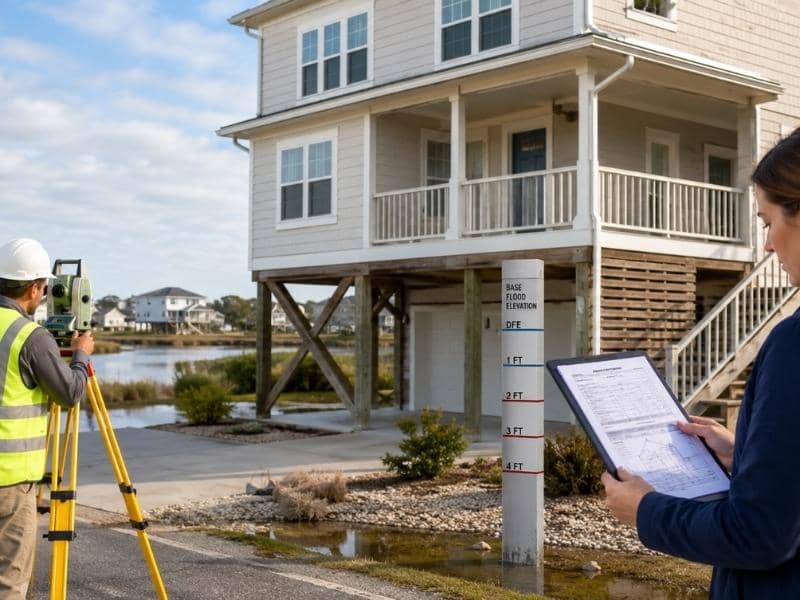
An elevation certificate often gets requested later than it should, usually right after a flood insurance quote comes back higher than expected. Getting this document earlier in the process can save a lot of guesswork, and sometimes a fair amount of money too.
What an Elevation Certificate Shows
An elevation certificate shows how high a building sits compared to the local flood level. That comparison is the whole point of the document. It tells you, in clear numbers, whether a structure sits above, at, or below the level where flooding is expected to be a concern.
This isn’t a guess or a rough estimate. It’s based on actual measurements taken at the property, which is why it carries weight with insurance companies and lenders. Without it, flood risk gets estimated using general area data instead of the specific details of one building, and that difference can matter quite a bit.
Why Insurance Agents May Need It
Insurance agents often ask for an elevation certificate because it gives them something solid to work with. Flood zones cover wide areas, but not every building within a zone faces the same risk. Two homes on the same street can sit at different elevations, and that difference can change how much flood insurance actually costs.
With the certificate in hand, an agent can offer more accurate flood insurance details instead of relying on broader assumptions about the neighborhood. That accuracy can work in the owner’s favor. A building that sits higher than the flood level might qualify for a lower premium than the general zone rate would suggest.
Asking About Flood Insurance Early
A lot of owners don’t think about flood insurance until it’s already part of a closing process or a policy renewal, and by then, there’s less room to plan around it. Asking early, before buying, selling, or making changes to coverage, gives everyone more time to sort out the details.
This is especially useful for buyers. Finding out the flood insurance cost before closing on a property means there won’t be a surprise added to the monthly budget after the fact. Sellers benefit too, since having an elevation certificate ready can make a property easier to market to buyers who are asking flood-related questions of their own.
How Building Height Can Affect Risk
The height of a building compared to the flood level plays a direct role in how much risk it carries. A lower building, one that sits closer to or below the expected flood level, generally faces more risk. A higher building, one that clears that level by a good margin, generally faces less.
This is part of why two similar homes can end up with very different insurance costs. It’s not just about the flood zone the property falls into. It’s about how that specific structure measures up against the flood level in that zone. An elevation certificate is what turns that comparison from a rough guess into an actual number.
Planning Ahead Before You Need It
Property owners have good reason to check their flood details early rather than waiting until a transaction is already underway. Whether the goal is buying, selling, building something new, or simply reviewing current coverage, having accurate elevation information from the start makes every one of those steps smoother.
Waiting until the last minute often means fewer options and less time to compare insurance costs or make adjustments. Getting an elevation certificate early gives property owners a clearer picture of where they stand, which makes it easier to plan ahead with confidence instead of reacting to numbers after the fact.
Frequently Asked Questions
What is an elevation certificate?
It’s a document that shows how high a building sits compared to the local flood level, based on actual measurements at the property.
Why would an insurance agent need an elevation certificate?
Agents use it to assess flood risk more accurately, which helps them provide flood insurance details specific to that building rather than the general area.
Can an elevation certificate affect flood insurance cost?
Yes. Since building height plays a role in flood risk, the certificate can directly influence how much a flood insurance policy ends up costing.
When should I ask about an elevation certificate?
It’s best to ask early, ideally before buying, selling, building, or making any changes to flood insurance coverage.
Who can prepare an elevation certificate?
A licensed land surveyor, engineer, or another approved professional can typically prepare one.