
Why a Perc Test and Property Survey Should Be Scheduled Together
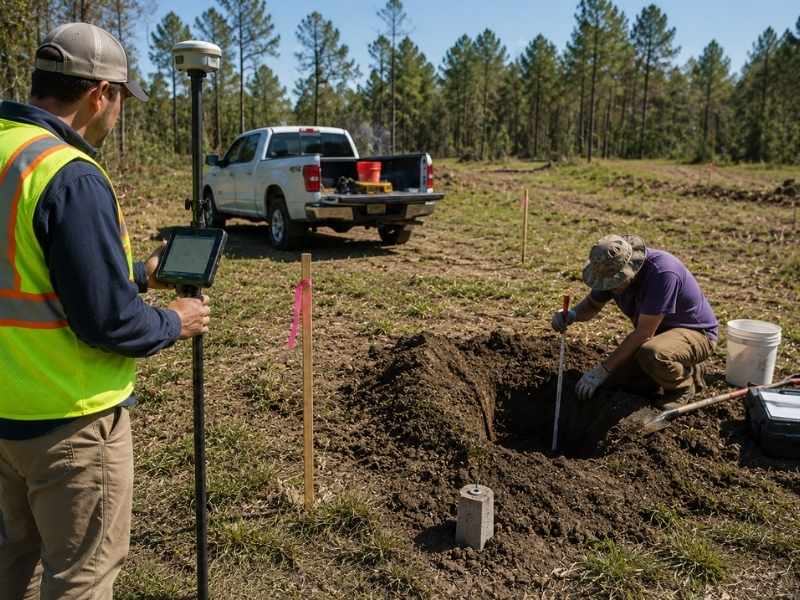
A perc test tells you whether the soil on a lot will absorb water well enough to support a septic system. It’s one of the first checks on any rural build, and it shapes where the house can sit. The catch is simple. That test only helps if the crew digs in the right place, and the right place depends on the property survey. Run a perc test without confirmed boundaries, and you can end up evaluating ground you can’t actually use. Scheduling the survey and the perc test together settles that before a single hole gets dug.
Match the Proposed Septic Area to the Right Boundaries
A perc test only counts if it happens on land you own. On rural parcels, the real property lines rarely match the fence, the tree line or where a neighbor thinks the corner sits. A property survey pins the legal boundaries, so the soil evaluator tests inside the parcel instead of on a strip that belongs next door or falls in a road right-of-way.
That matters well past the test itself. The spot that passes the perc test becomes the home for the drain field, and a drain field placed over a boundary is a serious problem to unwind later. Confirming the lines first means the system sits on ground you can legally build on and keep.
Reserve Room for Both the Primary and Replacement Drain Fields
A septic system needs more space than most people expect. Health codes usually require two drain field areas, the primary field that goes in now and a reserve area held for a future replacement, often the same size as the first. Both have to fit on the lot, on soil that passes and clear of everything the system has to avoid.
This is where scheduling the survey with the perc test pays off. A survey shows exactly how much usable land the parcel holds once boundaries, easements and setbacks come off the total. With that picture in hand, the owner can reserve both fields before deciding where the house, the driveway and the well go. Lock in the house first, and there’s a real chance it boxes out the reserve field and forces a redesign.
Know the Easements and Setbacks Before You Test
A rural lot carries limits that don’t show up on a walk-through, and each one can rule out part of the property for septic. A perc test dug inside one of these zones wastes the trip, since the drain field can’t legally go there even if the soil passes. A property survey maps these constraints so the test lands somewhere the system can actually stay.
The limits that most often affect septic placement include:
- Utility and access easements that a drain field can’t sit under
- Recorded rights-of-way along roads or a shared driveway
- Existing or planned wells that need clear separation from the field
- Streams, ponds and wetlands with required buffer distances
- Property-line and foundation setbacks set by local health rules
Our overview of how easements and setbacks show up on a survey covers them further. For septic work, the point is simple. Know where they are before the perc test rather than after.
Line Up the Test With the Planned Home Layout
Good soil is only half of a good perc test spot. The other half is fit. A drain field has to sit a workable distance from the house, level or downhill where possible and clear of the driveway and utility runs. Test a far corner with great soil, and you might pass the perc test only to find the field sits nowhere near a practical homesite.
Survey information lets the soil evaluator, the builder and the owner work from the same map. They can pick test locations that match the proposed house, driveway and outdoor areas rather than an impractical corner. The slope and soil layout matter here too, and our guide to planning a rural build around the terrain covers that side of siting.
Skip the Repeat Visits and Redesign Bills
Booking the perc test and survey together saves money in ways that add up fast. Two separate trips to a rural site, often far apart, cost more than one visit where the crews share access and reference points. When the surveyor and the soil evaluator work from the same layout, nobody tests a spot that a boundary or easement later rules out.
The bigger savings come from avoiding a redesign. A perc test placed without survey data can pass in a spot that turns out to be unusable, which sends the whole site plan back to the drawing board. Catching that conflict up front costs a little coordination. Catching it after the house is sited costs a lot more.
Frequently Asked Questions
Should a property survey be completed before a perc test?
Ideally the two happen together, but the survey information should be in hand first. Boundaries, easements and setbacks decide which parts of the lot can even hold a septic system, so knowing them keeps the perc test on usable ground. Booking both as one coordinated visit is the most efficient way to handle it.
Does a perc test determine the location of a septic system?
Not on its own. The perc test shows where the soil will accept a drain field, but the final spot also has to clear boundaries, easements, well separation and the home layout. Soil results and survey data together decide where the system actually goes.
Can an easement affect where a perc test is performed?
Yes. A drain field usually can’t sit under a utility or access easement, so testing inside one wastes the effort even if the soil passes. A survey flags these areas ahead of time, which keeps the perc test on land the system can legally use.
How much land is needed for a replacement drain field?
Most health codes require a reserve area set aside for a future field, and it’s often the same size as the primary drain field. The exact space depends on the soil and the system type, since poorer soil needs a larger field. A survey helps confirm the lot holds room for both.
Who coordinates the survey and perc test for a rural homesite?
Usually the property owner or the builder lines them up, working with a licensed surveyor and a soil evaluator or the local health department. Scheduling the two together, from the same site plan, keeps everyone testing and measuring the same ground.