
ALTA Land Title Survey Surprises That Can Delay a Commercial Purchase
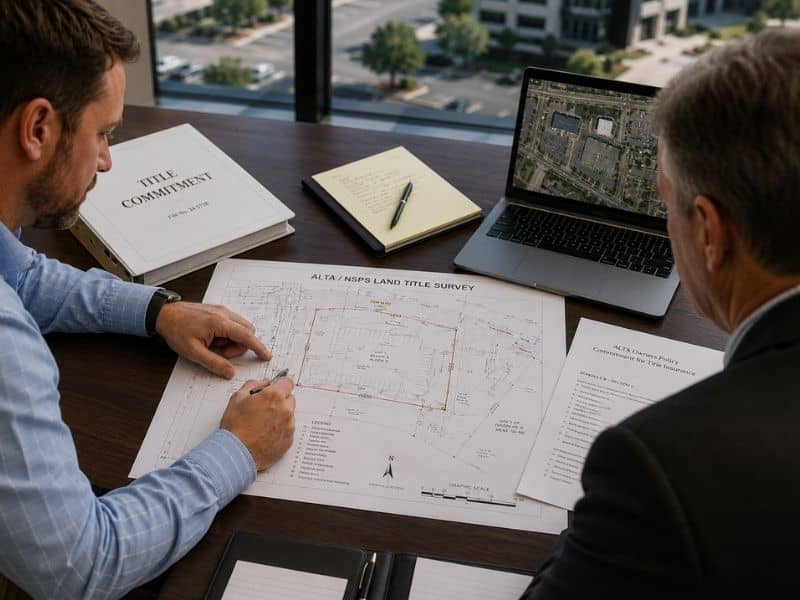
An ALTA land title survey is one of the last big pieces a commercial deal waits on, and that timing makes it a common source of delay. The survey itself rarely causes the holdup. What stalls a closing is a change to the survey late in the process: a revised title commitment, a new Table A request or an added party on the certification. Each one sends the surveyor back to work with the clock already running. Knowing which changes trigger a redo, and locking them down early, keeps the survey from becoming the reason a purchase slips.
The Title Commitment Drives the Survey, So Send the Current One
A surveyor doesn’t map exceptions out of thin air. The title commitment lists the recorded easements, restrictions and rights-of-way tied to the parcel, and the surveyor plots each one on the drawing. That’s why the survey and the title work are linked at the hip. The map is only as current as the commitment behind it.
Trouble starts when the commitment changes after the survey is underway. Title companies often issue an updated commitment as they dig deeper, and a new version can add exceptions the first one missed. Every added item means the surveyor has to research it, locate it and redraw the affected part of the survey. Get the current commitment into the surveyor’s hands early, and most of that rework never happens. Hand over a stale one, and the revisions pile up right when the schedule can least afford them.
Late Table A Requests Pull the Crew Back to the Field
An ALTA land title survey includes a set of optional items called Table A, and the buyer or lender picks which ones apply. These add specific detail to the survey, and each one carries its own fieldwork. Choosing them up front is simple. Adding them late is where the delays live, because a crew that has already left the site may have to go back for a single new item.
The Table A items that most often get added late include:
- Topographic contours and spot elevations across the site
- Flood zone determination tied to the current map
- Zoning and setback information from the local jurisdiction
- Parking counts and striping detail for the whole property
- Building heights, square footage or wall-tie measurements
None of these are hard on their own. The problem is timing. A lender who asks for parking counts or flood details a week before closing forces a return trip and a redraw that a day-one request would have folded into the original visit.
New Certification and Lender Requests Mean a Revision
Every ALTA survey carries a certification, a statement that names the parties who can rely on it: the buyer, the lender, the title company and sometimes others. That list isn’t a formality. The surveyor certifies to those specific names as of a specific date, so changing the list means reissuing the survey.
Late lender requirements cause the same ripple. A lender that joins the deal near closing may want its name added to the certificate, extended title coverage supported or an extra Table A item shown. Each request is small by itself, but each one sends the survey back for a revision and a fresh signature. The buyers who share the full list of parties and lender conditions early give the surveyor one clean target instead of a moving one.
Why One Late Change Can Move the Closing Date
The survey sits near the end of a dependency chain, and that position is what turns a small change into a delay. The commitment has to be final before the survey can be final, and the survey has to be final before the title company issues clean coverage and the deal closes. Change anything upstream, and everything downstream shifts with it.
That chain is why timing beats speed here. A revised commitment or a late Table A item adds more than a few hours of work. It resets the review, and the lender, the title company and the buyer all have to sign off again. Ordering the ALTA land title survey at the start of due diligence, and locking the title commitment, Table A list and certification parties before the crew mobilizes, keeps that chain from snapping late. For the site findings a survey turns up, like encroachments, shared access and easement conflicts, our pieces on what an ALTA survey reveals before a commercial deal and ALTA review for commercial redevelopment cover those in detail.
Frequently Asked Questions
Why does the surveyor need the current title commitment?
The commitment lists the recorded easements and restrictions the surveyor has to plot on the map. Working from an old version means missing exceptions the title company added later, which forces a redraw. Sending the current commitment up front keeps the survey accurate the first time and avoids a revision close to closing.
How do late Table A changes delay an ALTA land title survey?
Table A items each carry their own fieldwork, so adding one after the crew has left the site usually means a return trip. A request for parking counts, flood detail or contours a week before closing can push the finished survey past the deadline. Selecting the full Table A list at the start folds that work into one visit.
Can an added lender or certification party require a survey revision?
Yes. The surveyor certifies the survey to specific named parties, so adding a lender or another party means reissuing it with a new certification. The revision itself is quick, but it still resets sign-off among everyone relying on the survey. Sharing the full party list early avoids the late redo.
What should a buyer lock down before the survey crew mobilizes?
Three things save the most time: the current title commitment, the full Table A selection and the complete list of certification parties. Settling all three before fieldwork starts gives the surveyor one clear scope instead of a moving target, which is the main way to keep an ALTA land title survey from holding up a deal.
Can an encroachment delay a commercial purchase?
It can. When the survey shows a structure or pavement crossing a boundary, the buyer, lender and title company usually want it resolved before closing, and that resolution takes time. Catching it early in due diligence leaves room to negotiate or fix it. Finding it late can push the closing date.